
Herbert L. White
The Charlotte Post
North Carolina’s Black voters are at risk of marginalization after a U.S. Supreme Court decision opens the door to partisan gerrymandering as a proxy for race.
The court last week voted 6-3 in Louisiana v. Callais to permit the drawing of congressional and legislative districts as partisan gerrymanders without regard for Section 2 of the Voting Rights Act of 1965, which bars laws resulting in reduced opportunities for racial minorities to elect their preferred candidates.
The lawsuit was filed by white Louisiana voters who sued the state to block the addition of a second majority-Black congressional district. Louisiana, where Black voters make up one-third of its electorate, was required by the VRA to draw new lines, which left the state with four majority-white districts. In response, Louisiana Gov. Jeff Landry last week suspended primary elections in order for the Republican majority legislature to redraw the map.
“It’s significant that this ruling will apply to this year’s midterm elections, all while democratic norms and institutions erode under executive overreach, weak judicial enforcement, and constant assaults to civil rights,” said Kristin Powell, executive director of Oakland, California-based Black Futures Lab. “We must call out these injustices, as it is clear that they want to keep Black people boxed out of power, and take us back to the times of Jim Crow — creating one set of rules for themselves and one set of rules for us.”
In North Carolina, which has petitioned for and defended gerrymandered districts since the 1990s, VRA-connected lawsuits are part of the state’s political landscape. Black voters make up 22% of the electorate.
“I think there’s a real distinct possibility” minority representation will be impacted with Section 2 curtailed, Davidson College political science professor Susan Roberts said. … “I believe fervently in the Voting Rights Act of 1965 and I think that the last Supreme Court decision, the Shelby decision, pretty much took away one of the core things of the Voting Rights Act, and that is the preclearance that in states that had a disproportionate turnout for Black voters, Hispanic voters were added and such that they were subject to preclearance.”
\
Conservatives hailed the decision as a win for removing race as a consideration in the political process.
“This ruling ends a legal catch-22 that forced states to choose between complying with the Constitution or defending themselves from lawsuits under conflicting interpretations of the Voting Rights Act,” said James Quarles, director of advocacy and engagement at Washington-based Heritage Action For America. “States now have long-overdue clarity to draw maps that reflect real communities — not arbitrary racial targets.”
Section 5 of the VRA, a landmark law from the Civil Rights Movement, mandated pre-clearance, or federal approval, in nine states, primarily in the Deep South – to change their voting rules. Counties in six other states – including 39 in North Carolina – were also subject to regulation. The Supreme Court ruled 5-4 in the 2013 Shelby County v. Holder case to release all jurisdictions from Section 5.
“North Carolina has been pretty much the epicenter of redistricting cases for a long time,” Roberts said. “The Supreme Court case wasn’t a shock, but it was so wide ranging, and probably one of the most important things is [Justice Samuel] Alito said in his decision that any kind of racism that existed at the time of the Voting Rights Act there’s no ongoing effect of societal discrimination. I think there are people that would disagree with that. I think there are people that would say there’s still discrimination. … We’re not in a post-racial environment.”
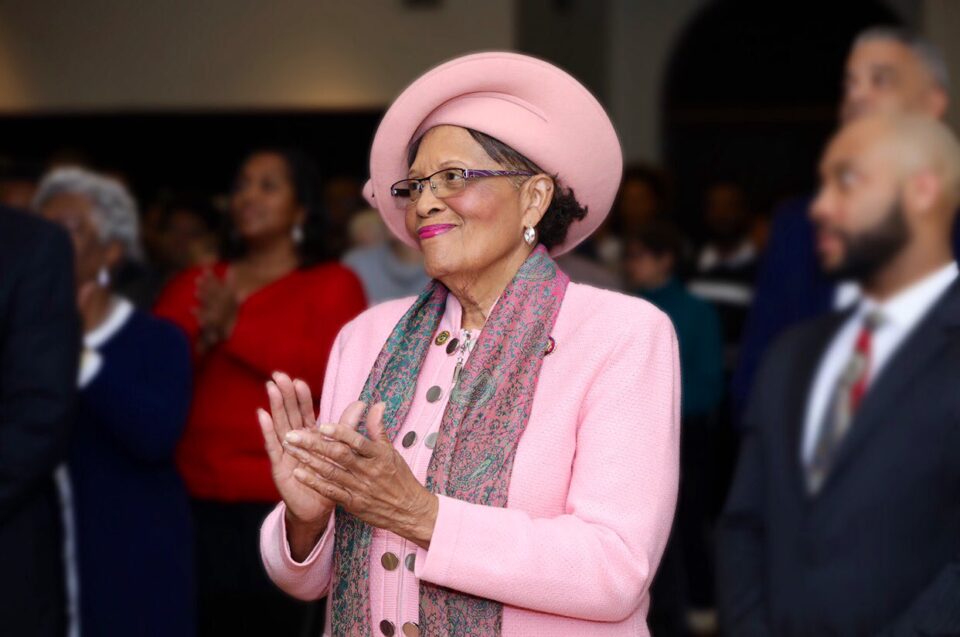
Said U.S. Rep. Alma Adams, a Black Democrat who represents Charlotte in District 12, in a statement: “Requiring proof of intent to discriminate in states with documented histories of racial voter suppression is not legal interpretation. It is judicial activism and willful blindness.”
Two North congressional districts – the 1st and 12th – were drawn in 1992 to give Black voters more latitude in electing candidates of their choice in accordance with the VRA. District 1 – now represented by Democrat U.S. Rep. Don Davis, has been redrawn to favor Republican candidates, giving the GOP an anticipated 11-3 majority.
“This recent Supreme Court ruling is part of a long assault on the Voting Rights Act of 1965,” Adams said. “The Supreme Court has weakened an essential provision in the VRA used to protect the country from extremely biased racial gerrymandering. These protections weren’t a favor; they were a debt this nation owed to Black Americans after centuries of terror at the ballot box.”
State lawmakers who draw congressional lines, are also responsible for legislative maps. With Republicans holding sizable majorities in North Carolina’s House and Senate, partisan gerrymandering as a proxy for race could be next.
“This is just an expansion of the policies that we’ve seen in North Carolina,” said state Sen. Caleb Theodros, whose District 41 includes northwest Charlotte. “Nobody’s going to look at the lines within North Carolina the past 20 years, whether they’re for state senate or congressional lines, and determine that they aren’t racist. As a matter of fact, the state Supreme Court found them to be racist, so we just see this as a step of the United States Supreme Court legitimizing some of the racist laws that we’ve seen locally. I think this is going to have a harmful impact.”
“The Supreme Court didn’t finish this in one day,” Adams said. They chipped away at it in 2013 with Shelby County V. Holder. They weakened it again in 2021 with Brnovich v. Democratic National Committee. Now, they’ve done what the majority has wanted all along and rendered the VRA nearly impossible to enforce with Louisiana v. Callais.”
Absent court challenges, federal and state legislation are the only way to remedy the Louisiana v. Callais precedent. That means electing officials willing to draw fair and representative maps.
“There’s still a lot that the state can do,” Theodros said, “because the state Supreme Court or the entire judicial system at the state ultimately determines, or has a big voice in how the state maps are in terms of the state Senate and state House, and the state Senate and state House are what draw the maps for the federal congressional districts.”
Said Adams: “I am calling on Congress to pass the John Lewis Voting Rights Advancement Act immediately,” which would restore a modernized preclearance formula and strengthens Section 2 by making it easier to challenge discriminatory laws, such as restrictive voter ID requirements or purges, that disproportionately affect voters of color.
“We did not come this far to go back.”
