
By Kylie Marsh
Kylie.marsh@triangletribune.com
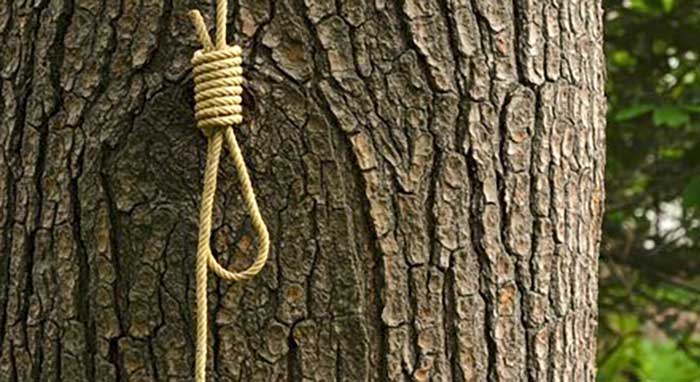
The recent hangings of African Americans across the South have resurrected lynching fears.
The hanging death of an unidentified man in Raleigh last month was called a suicide, as Raleigh Police Chief Rico Boyce stated in a press conference. Widespread conversation regarding the incident, whether on social media or in the press, has focused on historical and psychiatric evidence, calling the police department’s investigation into question.
Christopher Edwards, North Carolina Central adjunct professor of psychology, said a Black person committing suicide by hanging from a tree “would be considered epidemiologically rare.”
In September 2024, Javion Magee, a truck driver from Illinois, was found hanging from a tree in Henderson. In April 2025, Mario Kaiser Jr. was found hanging in Charlotte. In September, Demartravion “Trey” Reed and Cory Zukatis were found hanged in Mississippi. This May, Juliana Nzita was found hanging in Charlotte. In June, Cedric Tayuhe’s body was found in Harrisburg. On Aug. 3, Tasia Fortune’s body was found hanged in Mississippi. And Demetrius Fleming was found in Roanoke Rapids about a week after the Raleigh man’s body was found.
Magee’s, Kaiser’s, Nzita’s, Reed’s and Tayuhe’s deaths also have been publicly declared suicides by public officials.
Edwards said the deaths are “suspicious” because they all happened in the South. “It is inconsistent with the mechanisms that men, in particular Black men, use for suicide,” he told The Tribune. “It is typically a private affair. It is not designed to be public. Hanging from a tree is a public event designed to show you that you could be next, and so the nonsense that black people are hanging themselves from trees in public places is as inconsistent as the belief that shifting power structures has nothing to do with lynchings.”
In 2023, The Suicide Prevention Resource Center reported that the most common method of suicide is by firearm. For men, over half (55%) choose this method, and suffocation is No. 2, but the incidence drops to 24%. Similarly, outside of firearms, the incidence rate for poisoning and suffocation among women is tied at 26%.
Edwards said for these cases to be a suicide, there needs to be forensic evidence on both trees from which the victims were hanged and their own bodies that indicated they had been scaled to accomplish the task. This “suspends common sense,” he said.
The resurgence of these hanging deaths is to “terrorize” Black people into submission, he continued. Motivated by resentment toward advances in racial equality, Edwards argues the destabilization of white power structure in the South that has occurred in the past 20 years has led to lynchings.
“It is a way of balancing what politics cannot do,” he said. “…if you are a white man looking around you, what you see is the number of people like you is increasingly shrinking, and it does not give many avenues to continue your social standings to actually fix that. Lynching allows you the same autonomy to adjust your environment that lynching did in the 1800s.”
