
By Kylie Marsh
Kylie.marsh@triangletribune.com
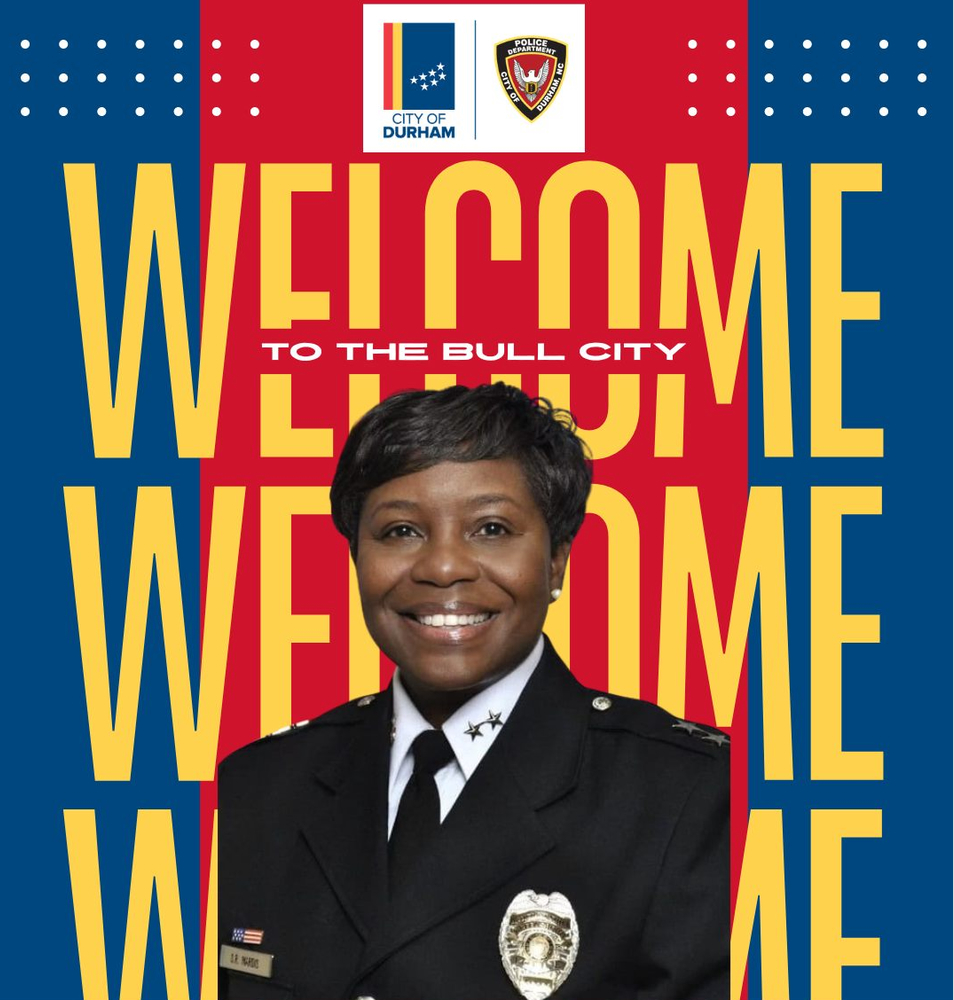
DURHAM – Durham’s newest police chief wants to emphasize respect, constitutional integrity and professionalism as she joins the force.
Stephanie Mardis, former assistant police chief of the Greensboro Police Department, will begin her new job Sept. 8. Mardis spent the last 25 years with the Greensboro police, and the last three years as assistant chief.
“There have been plenty of times in my career where I have arrested somebody, and they turned around and thanked me,” she told The Tribune. “It’s because the human decency portion of this matters; and rank and file, whether you agree with the philosophical approach of how we address crime in the city, what we cannot disagree on is decency and humanity.”
Mardis’ relationship with the Greensboro community got her strong public support in the race for police chief, but the position went to Kamran Afzal after a nationwide search.
“I really appreciate him, because he came into that difficult situation with an open heart, and we really developed an amazing professional and personal relationship that will probably last for years,” she said. Despite the disappointment at not getting the position, Mardis said she felt “called” to apply for the chiefship in Durham.
“When I saw the opportunity, I didn’t hesitate, and I applied because Durham is an amazing place,” she said. Durham is similar to Greensboro in that both cities have communities that are active and engaged.
“It was clear throughout the assessment process that Stephanie Mardis is a strong and thoughtful leader who understands both the challenges and the opportunities facing modern policing. Her experience, integrity and commitment to community partnership stood out from the very beginning,” said Robert Gaddy, president of the Fraternal Order of Police Durham County Lodge 2.
Mardis said Durham’s violent crime combined with quality of life issues present unique challenges to law enforcement. Earlier this month, Greensboro Police Department’s Forensics Division was ranked among the top 15 forensics labs in the world for operational efficiency by the American Society of Crime Laboratory Directors.
“Some of the success that I’ve seen in the Greensboro Police Department regarding pursuing the violent offenders who are committing violent crimes with weapons, the technology that they were using in Greensboro, really the same technology that’s being used here in Durham with the NIBIN (National Integrated Ballistics Network),” she said.
As a Black woman in a profession where white men are overrepresented, Mardis didn’t always feel self-assured, especially when she was starting out. “It’s heavy at times to be the voice of different groups,” she said. “I’ve grown to embrace that responsibility, because more times often than not, when I’m sitting around a table and I am the only one that looks like me at that table, and decisions are being made or policy is being created, I have a unique perspective that no one has thought of because they’re not sitting in that seat.”
Mardis also emphasized the significance of community partners to provide resources to community members as crime prevention. Mental illness, substance abuse, poverty, lack of healthcare are all stressors or conditions that can lead to crime.
“Durham residents helped define the priorities for this search from the very beginning,” City Manager Bo Ferguson said. “Chief Mardis demonstrated exceptional leadership, deep operational experience, and a clear dedication to transparency and community partnership. She is prepared to lead our department forward at a pivotal moment for public safety in our city.”
Mardis has set professional standards of respect between officers and the public as “non-negotiable.” This means not targeting people because of what they look like or what they worship or where they live, for example. However, respect “goes both ways.”
“When we put these uniforms and things on, it doesn’t make us superhuman. It doesn’t, you know, give us superhuman powers to resist the temptation to be human and respond.” she said. “I’m not saying that to defend any improper or unprofessional behavior, but what I’m saying is that the same decency and humanity that’s expected of officers, it goes both ways.”
