
By Roger Johnson
The Daily Drum
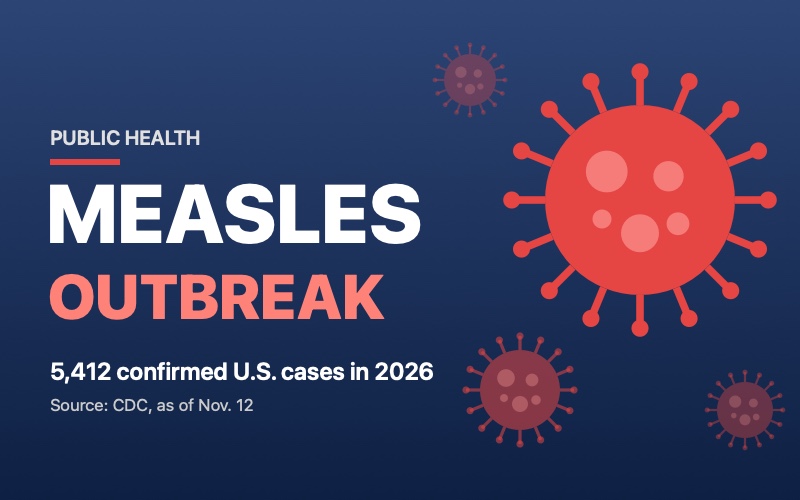
The United States is confronting a major resurgence of measles, a highly contagious viral illness once considered eliminated from continuous domestic transmission. According to the Centers for Disease Control and Prevention, 5,412 confirmed cases had been reported nationwide in 2026 as of November 12. Cases have been reported by 47 U.S. jurisdictions, along with additional cases among international visitors, making the outbreak a significant public-health concern.
Much of this year’s spread has occurred through clusters of related infections. The CDC reports 43 new outbreaks in 2026 and says 96 percent of confirmed cases are associated with outbreaks, including some that began in 2025. The scale of transmission is especially striking when compared with the 2,289 confirmed cases reported during all of 2025, showing how sharply measles activity has increased this year.
Measles spreads through the air and can move quickly among people who are not immune. Typical illness includes fever followed by a characteristic rash, but complications can include pneumonia, diarrhea, ear infections and, in rare cases, inflammation of the brain. The disease can be particularly serious for young children and other vulnerable people, and severe infections may require hospitalization.
Vaccination remains the primary tool for preventing measles and limiting outbreaks.
Public-health experts emphasize the importance of the measles, mumps and rubella (MMR) vaccine and of maintaining high vaccination coverage in communities. When vaccination rates fall, pockets of susceptible people can allow the virus to spread rapidly after it is introduced through travel or another exposure.
