
Kylie Marsh
The Charlotte Post
Mecklenburg County high school students are questioning state lawmakers’ education priorities.
Bills targeting cell phone use in classrooms, recitation of the pledge of allegiance and diversity initiatives and curriculum were introduced in the General Assembly last month.
HB87, the Cellphone Free Education Act, requires school districts “adopt a cell phone-free policy to eliminate or severely restrict student access to cellphones during instructional time.” Many CMS schools already have no-phone policies, which may include confiscating devices or moving them to a secure area in the classroom.
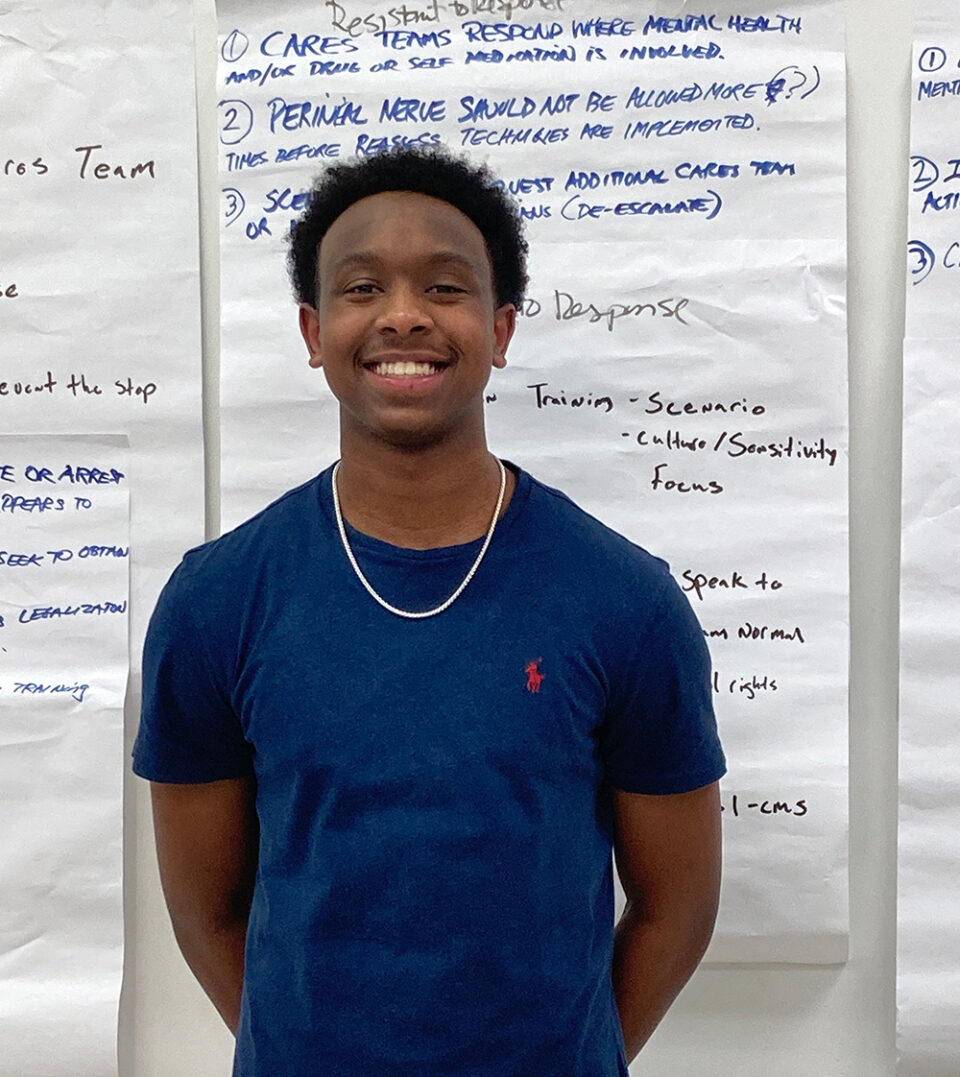
Chase Howard, a senior at Palisades High School, said enforcement of the district’s no-cellphone policy is up to teachers and a law guiding usage wouldn’t do much to increase student engagement. Classrooms have lockboxes for student mobile devices, which was an expenditure Howard said he and his peers were “vehemently against.”
“The issue of phones is exacerbated too much, I feel,” said Howard, a member of the Charlotte-Mecklenburg Youth Council, which is CMS’s student advisory board. Students, he believes, are going to use their phones regardless of law.
“We sometimes feel as students our lawmakers, instead of focusing on things that would actually help our schools, in terms of getting more for extracurricular programs and getting more money to our teachers, most importantly, they tend to focus on these little regulatory things that don’t help student life at all, doesn’t necessarily help increase that concentration in the classroom or engagement,” he said.
Charlotte-Mecklenburg’s school district, with 141,000 students, is the nation’s 16th largest and receives 54% of its funding through the state compared to roughly 8.4% from the federal government.
Anthony Korolos, a senior at Charlotte Christian School who also sits on the youth council, said that his peers’ top issues have to do with safety and disciplinary action being applied differently between schools, or racist incidents being ignored by school leadership.
H186, the Stars and Stripes Commitment Act, would require time to recite the Pledge of Allegiance to be scheduled into the beginning of every school day, as well as display the North Carolina and United States flags in every classroom. The bill would require schools “provide instruction on the meaning and historical origins of the flag and the Pledge of Allegiance.” It also states that “the school shall not compel any person to stand, salute the flag, or recite the Pledge of Allegiance.”
Korolos thinks CMS students won’t feel compelled to participate in the pledge.
“I think one phrase gets a lot of students is ‘justice and liberty for all’,” he said. “We’re seeing mass deportation, we’re seeing arrests for people using their freedom of speech, and then in schools when we see inequitable discipline for students of varying consequences that sometimes have to do with race, I think that’s where students are feeling like they’re not being represented and the pledge of allegiance doesn’t accurately portray the lives of American people, because it usually represents the rich and the majority; not the underrepresented people.” Korolos said this can create a significant disconnect for students.
Senate Bill 227, the Prohibit DEI In Public Education Act, would prohibit public schools from teaching “divisive topics.” The bill specifies that schools do not teach lessons that could possibly cause members of one racial group or gender to feel guilty or “responsible” for past atrocities committed against another racial group or gender; or that “the rule of law does not exist but instead is a series of power relationships and struggles among racial or other groups.”
“When you bundle all three of those laws together,” said West Charlotte High senior Bobby Forrest, “it kind of sounds like ‘Fahrenheit 451,’” a 1954 dystopian novel whose protagonist lives in a violent society under constant surveillance where books are outlawed.
Forrest calls DEI “the new straw man” of politics.
“It kind of sounds like you’re limiting access to information and forcing one ideal onto young, impressionable minds,” he said.
