
Herbert L. White
The Charlotte Post
Paula Williams suspected there were unmarked graves at Siloam Presbyterian Church Cemetery.
She had no idea how many.
The Siloam Presbyterian Church Cemetery Beautification Project located 190 unmarked plots in northeast Charlotte. Williams, the initiatives’s leader, thought there were 15. A team from Boone-based Seramur and Associates located eight based on visible depressions in the soil and ground-penetrating radar that detected the rest.
The graves were flagged last week, and the next step is to identify everyone buried there through public and family records such as obituaries.
“We assumed that there were more, but we had no idea that there were 190,” Williams said. “We were so excited.”
The results didn’t surprise Caitlin McCarthy, a Seramur geologist who teamed with environmental scientist Brooke Steenwyck to locate and mark the graves.
“This has happened in not all, but most burials that we find more than originally is reported,” she said, “because there’s a lot of times not everybody can afford to have a full burial or documents get lost on death dates or where people have been buried.”
The beautification initiative, launched four years ago, has evolved into recording and preservation of Siloam Presbyterian’s history and the families that shaped the north Charlotte community surrounding it.
Williams’ family, which helped build Siloam Presbyterian and the school for Black students built near it in the early 20th century, were accomplished during a time when the aspirations of Black people were limited by law and custom.
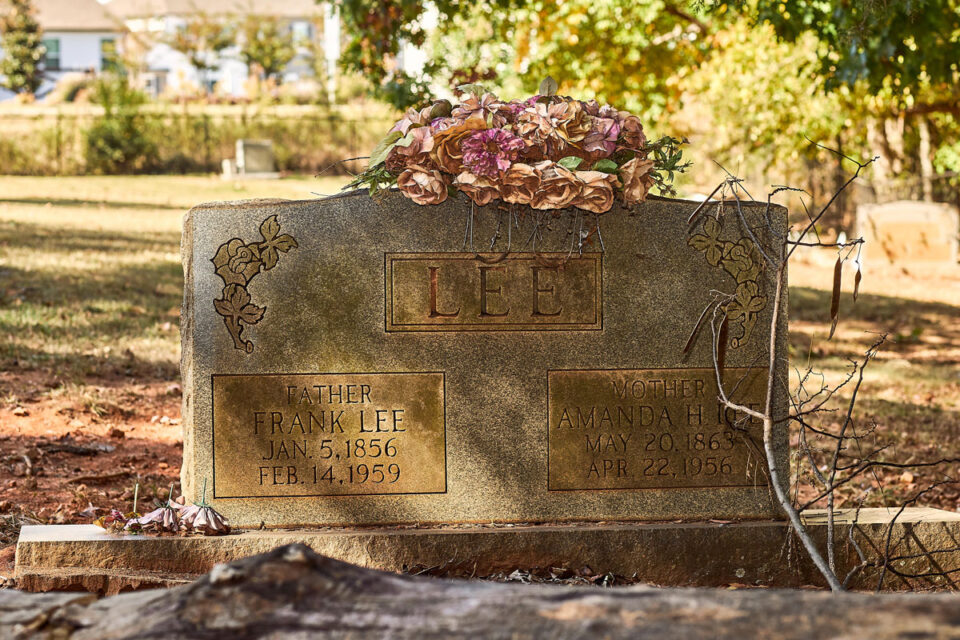
“We wanted to be able to tell the story about our phenomenal great-great grandparents, Frank and Amanda Lee, because they owned land all over Charlotte,” Williams said. “And in so doing, one of our cousins kept talking about the cemetery. She would bring it up every Saturday, because we would have a writing committee meeting … for four hours and she kept harassing us about the cemetery, and we just kept blowing her off.”
Frank and Amanda Lee, both born into slavery, were prominent members of the Siloam community. Frank, who died in 1959, tended sick and injured animals and owned 400 acres in Mecklenburg and Cabarrus counties, including property in today’s Eastover community in southeast Charlotte and Concord Mills.
Frank Lee, who was owned by forebears of former Duke Energy executive Bill Lee, “was a little bit of everything,” great grandson Frank Bauknight said. … “He was more like a businessman in the day, which was great to be an entrepreneur back then under the circumstances.”
Amanda, who died in 1956, was a midwife who delivered babies for Black and white families alike. She and Frank were church leaders at Siloam Presbyterian and donated time and resources to build the Scrub Hill School, which became Siloam School now located on the Charlotte Museum of History campus. Most of their 21 children are buried at the church cemetery, too.
“Knowing that we have as many graves out here today that’s unmarked is shocking to me, because this is a small area,” Bauknight said. “I’m just glad to be [Frank Lee’s] great grandson, and … I try to instill it in my children the legacy that he put before us being the guy that he is.”
Progress in plain sight
A fallen Leyland cypress at stands out at the cemetery, which is owned by the Charlotte Presbytery.
Splintered from its trunk, the tree crashed through a steel mesh fence, shattering a hand-carved stone bench sitting between Frank and Amanda’s headstone as well as those of Lovie Lee Winchester and Pinky Lee Gabriel. The headstones were spared. Williams said she’s reached out to the property owner to trim adjacent trees, to no avail.
Still, improvements have been made after years of neglect.
“We met with the Presbytery of Charlotte,” Williams said. “They installed the new fence; they installed the new sign. They keep the grass cut. They’ve done a fabulous job, but we were still missing the fact that we didn’t know how many people were out here.”
When the geology team arrived last week to mark the graves, so were family members, including cousins Frank Bauknight and Denise Turner, who introduced themselves for the first time. It also sparked personal recollections of family, community and faith.
“Church Road was once known as Frank Lee Road, and I can recall being a young girl coming to my aunt Rosie’s house on the weekends, my sister and I,” Williams said. “We would go to church with her at the house up here and stay all day, and Aunt Rosie would cook some of the most fabulous meals, and we always went home with a basket of fresh fruits or fresh vegetables from the garden.
“It’s important to us, not just because our family had land out here, but all of the other families, including the Neals, the Davises, the Grissoms, the Browns. There’s so many families out here, but they were well connected, and it was through the Siloam Presbyterian Church. … They depended on each other, they educated each other, and they shared with each other.”
