
By Roger Johnson
The Daily Drum
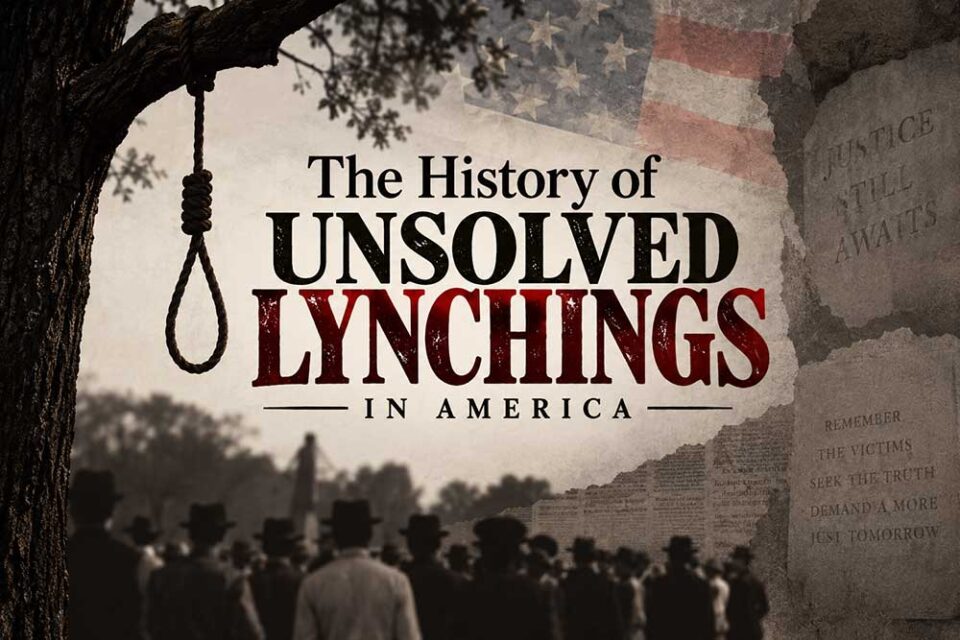
The history of racial violence in the United States is marked by countless tragedies, among them the haunting legacy of unsolved lynchings of Black individuals. Over the decades, at least 70 cases remain unresolved, each representing a life lost to hatred and injustice, and a family left without answers or closure. These unsolved crimes are more than statistics; they are stark reminders of a painful chapter in American history that continues to shape the present.
Lynchings, particularly in the late 19th and early 20th centuries, were acts of terror that sought to enforce racial hierarchy through brutality and fear. Black communities across the South, and even in other parts of the country, lived under the constant threat of violence. Many of these crimes were public spectacles, meant to intimidate, and were often carried out with impunity, as perpetrators faced little if any consequence. The lack of accountability was compounded by systemic racism in law enforcement and the justice system, making many investigations cursory at best, and at worst, intentionally obstructed.
The 70 unsolved cases highlight the enduring struggle for justice. Some of these lynchings occurred in small towns, others in more populous communities, but all share the common thread of families waiting decades for the truth. In many instances, witnesses were silenced by fear, and evidence was either ignored or deliberately destroyed. Efforts by organizations such as the Equal Justice Initiative and the NAACP have brought renewed attention to these cases, advocating for official investigations, public acknowledgment, and the memorialization of victims.
Today, the memory of those lost is honored through initiatives like the National Memorial for Peace and Justice, which documents the names of victims and their stories. These efforts serve as both a call to reckon with the past and a challenge to address the legacy of racial injustice in the present. As the country continues to confront systemic inequity, remembering these unresolved lynchings is essential—not only to honor those who suffered but also to ensure that history does not repeat itself.
In recent years, scholars and activists have increasingly turned to archival research and oral histories, striving to piece together fragments of evidence that might lead to renewed investigations. This painstaking process often involves tracking down court records, old newspaper articles, and family testimonies that have survived generations. Each discovery, no matter how small, becomes a crucial piece of the puzzle, offering hope that justice may one day be served, even decades after the crimes occurred.
Furthermore, local communities have begun to play a vital role in acknowledging and healing from the wounds of the past. In places where lynchings once took place, residents have organized remembrance ceremonies and educational programs to foster dialogue and empathy. These gatherings not only amplify the stories of victims but also encourage reconciliation and a deeper understanding of the lasting impact of racial violence. By engaging younger generations in these efforts, communities are building bridges across divides and nurturing a culture of accountability.
The media’s renewed focus on unsolved lynchings has also prompted government agencies to reconsider their approach to cold cases. In certain instances, law enforcement officials have reopened investigations, sometimes leading to posthumous exonerations or, at the very least, an official acknowledgment of the injustice. Although justice delayed can never fully compensate for lives lost and families shattered, these gestures provide a measure of solace and recognition that was denied for far too long.
Ultimately, the pursuit of justice for victims of unsolved lynchings is intertwined with broader efforts to dismantle systemic racism. It is a reminder that confronting the legacy of racial violence is not merely an act of remembrance, but a commitment to building a society where equality and dignity are truly upheld. As more voices join the call for truth and accountability, there is hope that future generations will inherit a country that has not only learned from its history but has actively worked to transform it for the better.
